
How Fine Must Filtration Be to Capture Microplastics?
Microplastic removal efficiency at 5µm filtration grade: up to 78–85% of particles by count Effective capture threshold for most microplastic fragments: particles ≥ 2.5µm Proportion of microplastics in municipal wastewater smaller than 10µm: estimated 60–70%Microplastics have become one of the defining water quality challenges of the modern era. Found in rivers, lakes, drinking water sources, and even treated effluent, these tiny synthetic particles demand filtration solutions that go far beyond conventional approaches. For engineers and operators working in tertiary treatment and advanced water reclamation, the critical question is not simply whether to filter for microplastics — but how fine that filtration must actually be.
Understanding Microplastic Particle Size
Microplastics are broadly defined as synthetic polymer particles smaller than 5 millimeters. However, the particles that most commonly escape conventional treatment are far smaller — typically in the range of 1µm to 100µm. This is where filtration grade becomes decisive.
Particles in the 10µm to 100µm range — including larger microplastic fibers, fragments, and pellets — are reasonably well captured by standard secondary treatment processes. The real challenge lies with the fraction below 10µm. These submicron and near-submicron particles:
- Pass through conventional sand filters and clarifiers with minimal retention
- Are shed in large quantities from synthetic textiles during laundering
- Include tire wear particles, paint fragments, and degraded polymer debris
- Represent the fraction most likely to bioaccumulate in aquatic organisms
This is why filtration grade selection is not a minor operational detail — it is the single most important variable in determining how effectively a system captures microplastics.
Why 10µm Is Often Not Enough
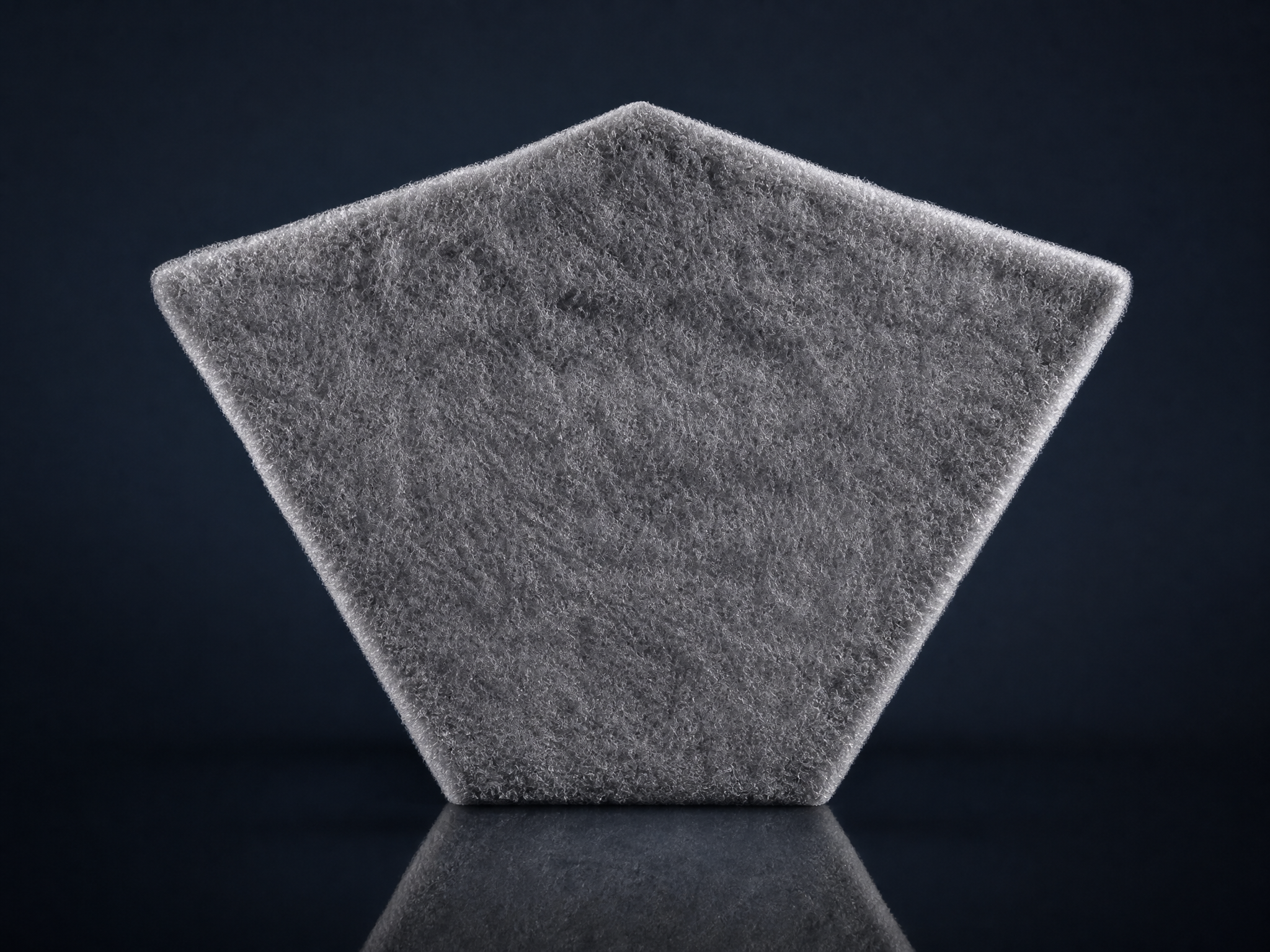
A Standard 10µm Pile Filter Cloth performs well for suspended solids, phosphorus-bound particles, and general tertiary polishing. But when microplastic removal is a specific treatment objective, the limitations of 10µm filtration become apparent. A significant portion of microplastic particles — particularly fibers from synthetic fabrics — fall well below this threshold.
Operators targeting microplastic reduction should consider moving to finer filtration grades as a primary strategy, rather than relying solely on coagulation or sedimentation upstream.
The 5µm Threshold: A Meaningful Step Forward
Moving to a 5µm filtration grade represents a substantial improvement in microplastic capture performance. At this level, pile cloth media can intercept the majority of microplastic fragments and fibers that pass through coarser filters.
The Bioactive 5µm Microfiber pile cloth media is specifically engineered for this range, combining dense microfiber construction with anti-fouling surface properties. This is particularly relevant in municipal wastewater treatment applications where textile fiber microplastics — among the most abundant categories in effluent — are a primary concern.
Key insight: Filtration at 5µm can capture the majority of microplastic particles by mass, since larger fragments carry proportionally more material. However, capturing particles by count — which matters for ecological impact assessments — requires going finer still.
Pushing to 2.5µm: The Supermicrofiber Advantage
For facilities with stringent effluent standards or discharge into sensitive receiving waters, 2.5µm filtration represents the current practical frontier for pile cloth technology. The Supermicrofiber 2.5µm pile cloth media achieves capture of particles well into the sub-5µm range, addressing the fraction of microplastics that even 5µm filtration allows to pass.
At this filtration grade, operators should be aware of several operational considerations:
- Hydraulic loading rates may need adjustment to maintain flux through finer media
- Backwash frequency typically increases, requiring careful cycle optimization
- Upstream pre-treatment quality becomes more important — higher influent solids loads can blind fine pile cloth media prematurely
- Pressure differentials across the filter must be monitored more closely
Despite these considerations, supermicrofiber pile cloth media maintains the core operational advantages of rotating drum or disc filter configurations: continuous operation, gravity-driven flow, and in-place cleaning without media removal.
Practical Guidance for Filtration Grade Selection
When evaluating which filtration grade is appropriate for microplastic removal, consider the following framework:
- General tertiary polishing with incidental microplastic reduction → 10µm pile cloth may suffice
- Active microplastic reduction as a treatment objective → 5µm microfiber pile cloth is the recommended baseline
- Stringent discharge limits or sensitive receiving environments → 2.5µm supermicrofiber pile cloth provides maximum capture efficiency
- Combination approach → Some facilities use coarser pre-filtration upstream of finer pile cloth stages to extend media life
It is also worth noting that particle shape matters. Microplastic fibers — which are elongated and flexible — can orient themselves along flow paths and pass through nominal filter ratings more easily than spherical particles. Pile cloth media, with its three-dimensional fiber matrix, is inherently better suited to capturing irregular particle geometries than flat membrane or screen-type filters.
Summary and Key Takeaways
Capturing microplastics effectively requires filtration grades finer than most conventional tertiary systems provide. The 10µm threshold that serves well for suspended solids removal is insufficient when microplastic reduction is a defined treatment goal.
- 5µm pile cloth media offers a practical, high-performance baseline for most microplastic removal applications
- 2.5µm supermicrofiber media provides the finest available pile cloth filtration for the most demanding requirements
- Filtration grade selection should be guided by the specific particle size distribution of the influent and the sensitivity of the receiving water body
- Pile cloth filtration technology — with its continuous operation capability and robust cleaning mechanisms — is well-positioned as a core technology in the emerging field of microplastic control at the municipal and industrial scale
Related: Learn more | Learn more
Read More Articles
Discover more insights on pile cloth filtration and water treatment.