
Achieving TSS Below 2 mg/L: What It Takes
For most wastewater treatment facilities, hitting a total suspended solids (TSS) target below 2 mg/L represents a significant operational challenge. Standard secondary treatment rarely achieves this level consistently. Reaching this threshold demands a carefully engineered approach to advanced treatment — one where the choice of filtration media, operational parameters, and system design all play a critical role.
Whether driven by increasingly stringent discharge permits, water reuse requirements, or environmental sensitivity of the receiving water body, the push toward ultra-low TSS effluent quality is reshaping how engineers and plant operators think about tertiary filtration.
Why 2 mg/L Is a Different Challenge
It is important to understand that achieving TSS below 2 mg/L is not simply an incremental improvement over achieving 5 or 10 mg/L. It represents a fundamentally different filtration task.
At higher TSS targets, conventional tertiary filtration — including sand filtration or coarser cloth media — can often perform adequately. But as the target drops toward 2 mg/L and below, several factors become critical:
- Particle size distribution shifts — the remaining solids at this stage are predominantly fine colloidal and sub-micron particles that behave differently under hydraulic loading
- Variability in upstream processes — even small fluctuations in secondary clarifier performance can spike TSS loads, making consistent sub-2 mg/L effluent difficult to guarantee
- Filter media selection becomes decisive — coarser filtration grades simply cannot reliably capture the fine particulate fraction responsible for pushing TSS above target
This is the operational reality that makes advanced treatment design so demanding at this performance level.
The Role of Pile Cloth Filtration in Ultra-Low TSS Applications
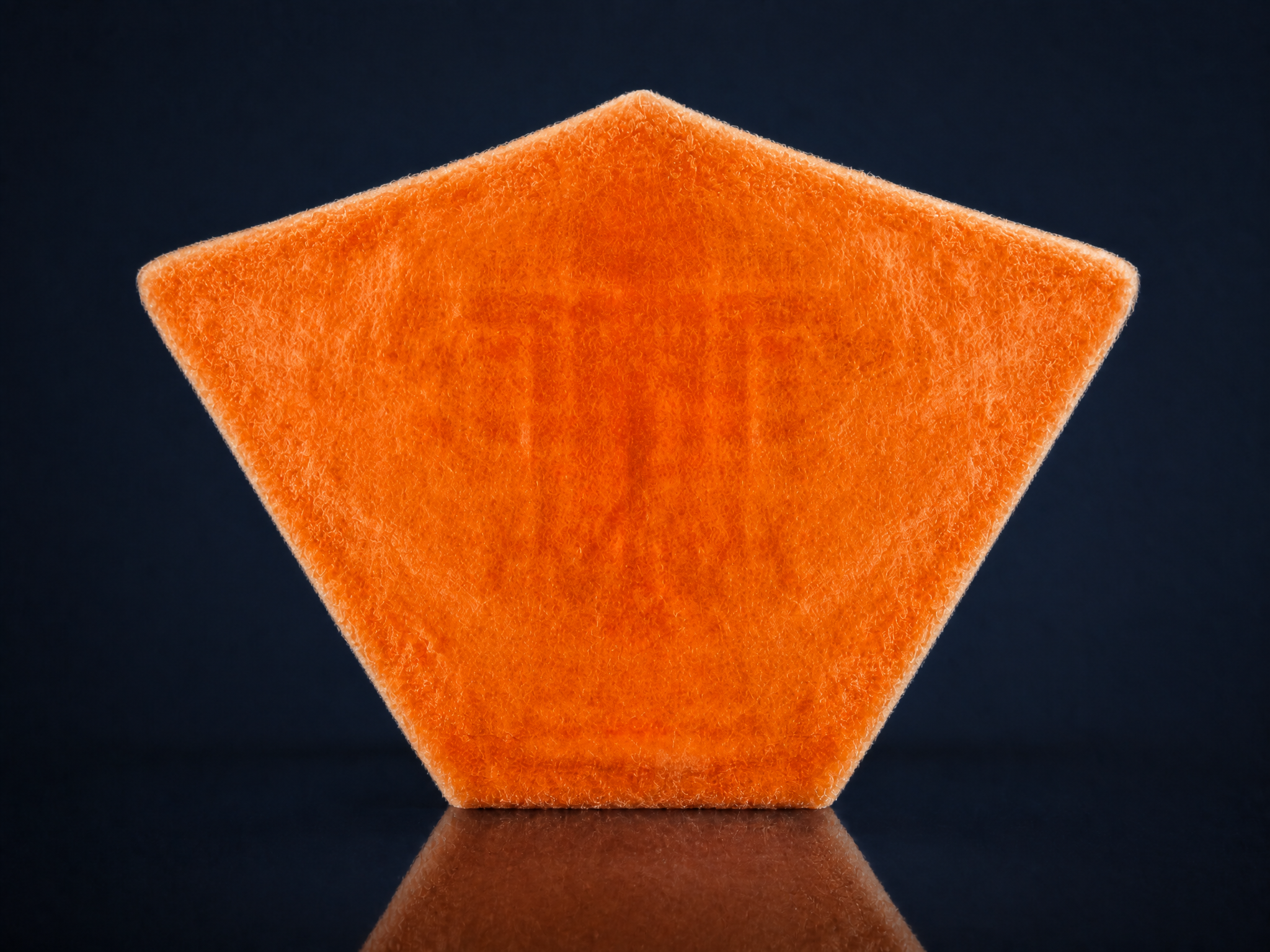
Pile cloth filtration has established itself as a leading technology for tertiary wastewater treatment precisely because it combines high hydraulic capacity with fine filtration performance. Unlike granular media filters, pile cloth systems use a fabric medium with a three-dimensional fiber matrix — the "pile" — that physically captures suspended solids through depth filtration rather than surface filtration alone.
This structural characteristic is what makes pile cloth particularly well-suited to sub-2 mg/L TSS targets.
Choosing the Right Filtration Grade
Not all pile cloth media are equal, and filtration grade selection is arguably the most important decision when targeting ultra-low TSS effluent quality.
For applications demanding consistent TSS below 2 mg/L, the Bioactive 5µm Microfiber grade is typically the starting point. With a nominal filtration rating of 5 micrometres, this microfiber pile cloth captures fine suspended solids that standard coarser media would pass through. The dense microfiber pile structure creates a highly effective filtration zone while still maintaining acceptable hydraulic throughput.
Where effluent quality targets are even more demanding — or where upstream variability is high — operators may evaluate the Supermicrofiber 2.5µm grade, which pushes filtration performance into the sub-3 micrometre range. This ultra-fine pile cloth is designed for applications where consistent, near-zero TSS discharge is a regulatory or process requirement.
Key insight: Selecting a finer filtration grade is not simply about achieving lower TSS numbers in ideal conditions — it is about maintaining those numbers under variable loading, temperature changes, and seasonal biological shifts in the upstream process.
Operational Factors That Determine Success
Even with the correct pile cloth grade installed, achieving and sustaining TSS below 2 mg/L requires attention to several operational variables:
- Hydraulic loading rate — operating within the recommended flux range for the selected pile cloth grade is essential; excessive loading compresses the pile structure and reduces filtration efficiency
- Backwash frequency and intensity — pile cloth systems rely on effective in-situ cleaning to prevent solids blinding; optimising backwash cycles maintains consistent effluent quality without excessive water loss
- Pre-treatment quality — the cleaner and more consistent the secondary effluent entering the pile cloth filter, the more reliably ultra-low TSS targets can be met
- Monitoring and control — online turbidity monitoring at the filter outlet provides real-time feedback, allowing operators to detect any deterioration in effluent quality before permit limits are breached
Applications Where Sub-2 mg/L TSS Is Required
The demand for TSS below 2 mg/L is growing across several application areas:
- Water reuse and recycled water schemes — where treated effluent enters irrigation, industrial cooling, or indirect potable reuse pathways
- Sensitive receiving environments — discharge to lakes, coastal waters, or ecologically protected waterways where fine solids loading causes measurable ecological impact
- Nutrient removal polishing — where residual TSS carries bound phosphorus or nitrogen, and ultra-low TSS is necessary to meet combined nutrient discharge limits
- Upstream membrane protection — where pile cloth filtration acts as pre-treatment before reverse osmosis or ultrafiltration membranes, protecting membrane integrity and reducing fouling rates
Summary and Key Takeaways
Achieving TSS below 2 mg/L is a realistic and increasingly common operational target — but it requires the right combination of filtration media selection, system design, and operational discipline.
The core principles are straightforward:- Standard coarser filtration grades are insufficient; microfiber or supermicrofiber pile cloth grades are required
- Hydraulic loading, backwash optimisation, and upstream pre-treatment quality all directly influence whether sub-2 mg/L performance is sustained consistently
- Advanced treatment with pile cloth filtration offers a compact, energy-efficient pathway to ultra-low TSS effluent quality compared to many alternative technologies
For facilities evaluating their tertiary filtration options or upgrading existing systems to meet tighter discharge standards, pile cloth filtration at the appropriate microfiltration grade represents a proven and practical solution. Explore the full range of applications where pile cloth technology is delivering advanced effluent quality performance.
Related: Learn more | Learn more
Read More Articles
Discover more insights on pile cloth filtration and water treatment.