
Effluent Polishing: Why the Last Treatment Step Matters Most
Typical TSS removal efficiency of pile cloth filtration in effluent polishing: >95% Achievable effluent TSS concentrations: <5 mg/L Filtration footprint reduction vs. conventional sand filters: up to 50%In wastewater treatment, the final stage before discharge or reuse is often where the most critical decisions are made. Effluent polishing — the process of refining treated water to meet stringent quality standards — represents the last line of defense between a treatment facility and its receiving environment. Yet despite its importance, this tertiary treatment step is frequently underestimated in process design. Understanding why it matters, and what technologies best serve it, is essential for operators and engineers who take water quality seriously.
What Is Effluent Polishing?
Effluent polishing refers to the advanced treatment of secondary-treated wastewater to remove residual suspended solids, fine particulates, and in some cases nutrients or micropollutants, before final discharge or water reuse. It is the defining step of tertiary treatment, positioned after biological and chemical processes have done their primary work.
At this stage, the water may appear visually clean — but appearances can be deceptive. Residual total suspended solids (TSS), fine colloidal particles, and biological floc fragments can still be present in concentrations that exceed regulatory thresholds or make downstream reuse impractical.
Key insight: Even well-performing secondary treatment systems can produce effluent with TSS levels of 20–40 mg/L. Effluent polishing can reduce this to below 5 mg/L — a critical difference for discharge compliance and water reuse suitability.
Why the Last Step Carries the Most Weight
Every treatment stage builds on the previous one. But it is the final effluent quality that determines regulatory compliance, environmental impact, and the feasibility of water reclamation. Here is why effluent polishing deserves priority attention:
- Regulatory pressure is tightening. Discharge limits for TSS, turbidity, and nutrients are becoming more stringent across most jurisdictions. Effluent polishing is often the only way to reliably meet these evolving standards.
- Water reuse demands higher quality. Agricultural irrigation, industrial cooling, and indirect potable reuse all require consistently low TSS and turbidity levels. Without effective polishing, reuse options are limited.
- Upstream variability is unpredictable. Biological treatment processes fluctuate with temperature, load, and influent composition. Effluent polishing acts as a buffer, absorbing upstream inconsistencies and delivering stable output water quality.
- Environmental protection begins at the outfall. Excess suspended solids in receiving waters contribute to oxygen depletion, light attenuation, and habitat degradation. The polishing step is where environmental stewardship becomes measurable.
Pile Cloth Filtration as a Polishing Technology
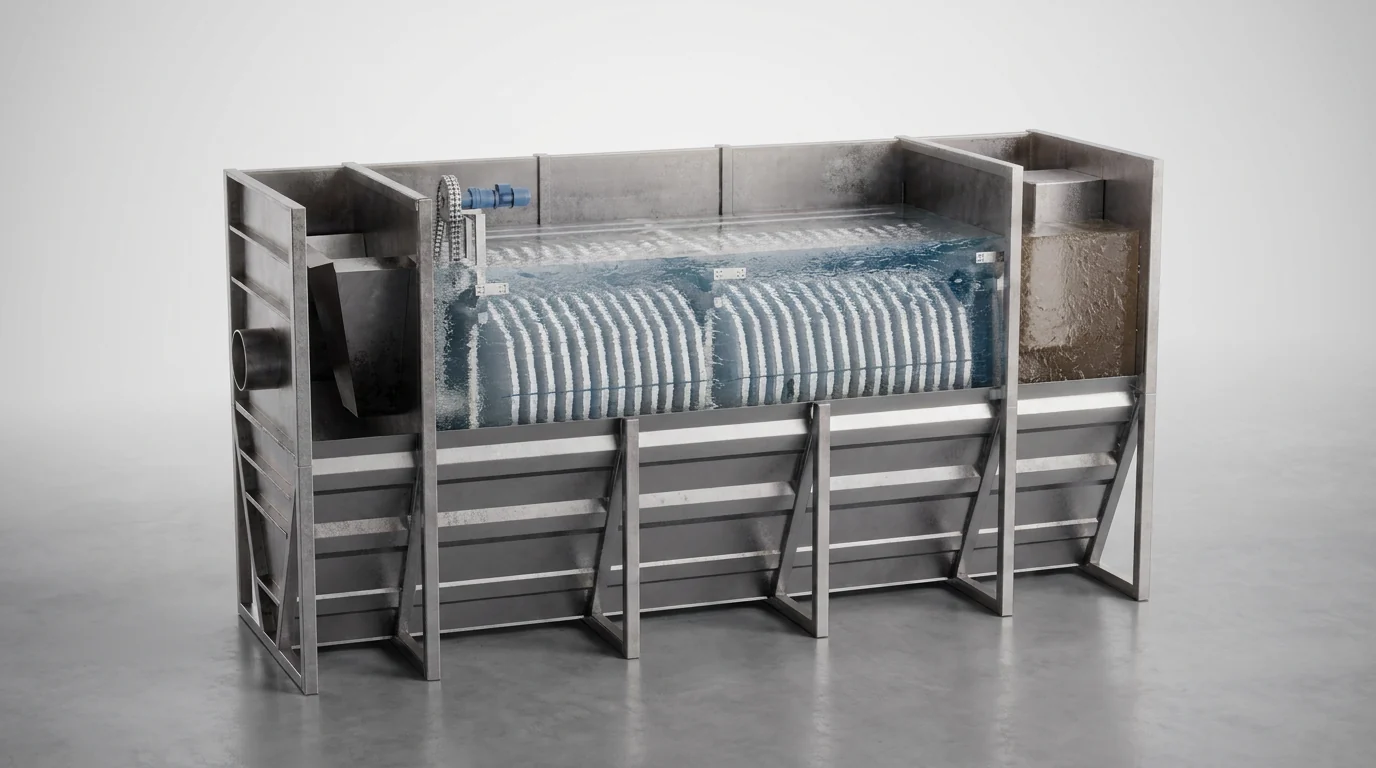
Among the technologies available for effluent polishing, pile cloth filtration has established itself as a highly effective and operationally practical solution. Unlike granular media filters, pile cloth filters use a three-dimensional textile surface — the pile layer — to capture fine particles through a combination of mechanical straining and depth filtration within the fiber matrix.
This approach offers several advantages in polishing applications:
- Continuous operation without the need for full backwash cycles that take filter units offline
- Compact footprint, making it well-suited for retrofitting into existing treatment plants
- Consistent effluent quality even under variable influent loading conditions
- Low energy consumption compared to pressure-driven alternatives
The selection of pile cloth grade directly influences polishing performance. For standard polishing duties where TSS removal to below 10 mg/L is the target, a Standard 10µm Pile Filter Cloth typically provides the right balance of flow capacity and particle capture. Where more demanding water quality targets apply — such as reuse applications or sensitive receiving environments — finer grades such as the Supermicrofiber 2.5µm can achieve effluent TSS levels well below 5 mg/L, capturing particles that standard filtration would pass.
Practical Considerations for Operators
For engineers and plant operators evaluating or optimizing an effluent polishing stage, several practical factors deserve attention:
Influent Characterization
Understand the nature of the solids entering the polishing stage. Fine biological floc behaves differently from inorganic grit. Pile cloth filtration generally handles biological floc well, but characterizing particle size distribution helps in selecting the appropriate filtration grade.
Hydraulic Loading Rates
Pile cloth filters are designed to operate within specific flux ranges. Oversizing the installation provides resilience during peak flow events — an important consideration for facilities handling stormwater-influenced flows.
Maintenance and Cleaning
Pile cloth media requires periodic cleaning, typically through a rotating brush or backwash mechanism integrated into the filter unit. Understanding cleaning frequency under site-specific conditions helps operators plan maintenance schedules and avoid unexpected performance drops.
Integration with Upstream Processes
Effluent polishing performs best when upstream treatment is functioning well. Significant upsets in secondary treatment — such as sludge bulking events — will increase the load on the polishing stage. Monitoring upstream performance helps anticipate and manage these events.
Summary and Key Takeaways
Effluent polishing is not an optional finishing touch — it is the stage that determines whether a treatment facility truly delivers on its environmental and operational commitments. As discharge standards tighten and water reuse becomes increasingly important, the ability to consistently achieve low TSS and high water quality at the final treatment step becomes a competitive and regulatory necessity.
Pile cloth filtration offers a proven, compact, and energy-efficient pathway to reliable effluent polishing. Matching the correct filtration grade to the application — whether standard or ultra-fine — is the key to unlocking its full potential. For a broader view of where pile cloth filtration fits across different treatment scenarios, explore our Applications overview.
Bottom line: In wastewater treatment, the last step is not the least important — it is often the most important. Investing in effective effluent polishing protects receiving environments, enables water reuse, and ensures compliance with the standards that matter most.
Related: Learn more
Read More Articles
Discover more insights on pile cloth filtration and water treatment.