
Phosphorus Removal in Wastewater Treatment: A Complete Guide
Typical discharge limit for total phosphorus: < 1 mg/L (often < 0.1 mg/L in sensitive catchments) Phosphorus responsible for eutrophication: as little as 0.02 mg/L can trigger algal blooms in receiving waters Efficiency of tertiary filtration for phosphorus polishing: up to 95%+ removal achievable with advanced pile cloth systemsPhosphorus is one of the most closely regulated nutrients in treated wastewater effluent — and for good reason. Even at trace concentrations, dissolved and particulate phosphorus discharged into rivers, lakes, and coastal waters drives eutrophication: the rapid, uncontrolled growth of algae and aquatic plants that depletes oxygen, kills aquatic life, and degrades water quality for communities downstream.
For wastewater treatment plant operators and engineers, achieving consistent, low-level phosphorus removal is one of the most demanding challenges in modern effluent management. This guide explains the mechanisms of phosphorus removal, the role of tertiary filtration, and how advanced pile cloth media fits into a robust treatment strategy.
Why Phosphorus Removal Matters
Phosphorus enters municipal and industrial wastewater from many sources: human waste, detergents, food processing, agricultural runoff, and stormwater. Unlike nitrogen, phosphorus does not volatilize — it must be physically or chemically captured and removed from the water stream.
The consequences of inadequate removal are serious:
- Eutrophication of receiving water bodies, leading to hypoxic "dead zones"
- Toxic algal blooms that threaten drinking water intakes
- Regulatory non-compliance and potential fines
- Long-term ecological damage to sensitive aquatic ecosystems
Regulatory pressure on phosphorus limits has tightened significantly in recent years, with many jurisdictions now requiring effluent total phosphorus (TP) concentrations well below 1 mg/L — and sometimes below 0.1 mg/L in ecologically sensitive areas.
The Three Pillars of Phosphorus Removal
Effective phosphorus removal in wastewater treatment typically relies on a combination of three complementary approaches:
1. Biological Phosphorus Removal (Bio-P)
Enhanced biological phosphorus removal (EBPR) uses specialized microorganisms — polyphosphate-accumulating organisms (PAOs) — that absorb phosphorus in excess of their metabolic needs under alternating anaerobic and aerobic conditions. The phosphorus-rich biomass is then removed with the waste sludge. Bio-P is cost-effective but sensitive to process upsets and rarely achieves the lowest discharge limits on its own.
2. Chemical Precipitation
Dosing with metal salts — typically aluminum sulfate (alum), ferric chloride, or lime — precipitates soluble phosphorus into insoluble particles that can be settled or filtered out. Chemical precipitation is reliable and effective but generates additional sludge and incurs ongoing chemical costs.
3. Tertiary Filtration (Polishing)
Even after biological and chemical treatment, residual phosphorus — often bound to fine suspended solids and colloidal particles — remains in the effluent. Tertiary filtration is the final polishing step that captures this residual fraction and brings total phosphorus concentrations into compliance with the most stringent discharge limits.
The Role of Pile Cloth Filtration in Phosphorus Polishing
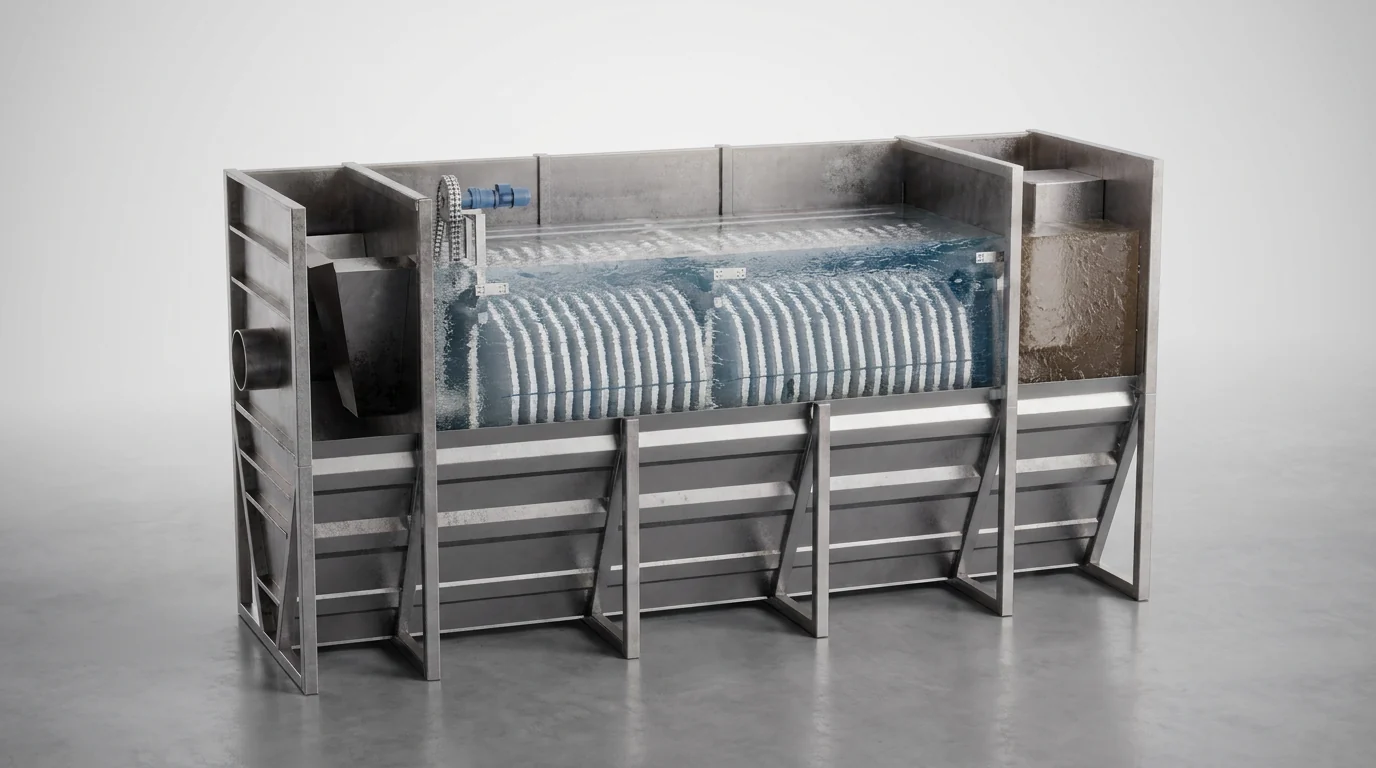
Pile cloth media filters have become a preferred technology for tertiary phosphorus polishing in municipal and industrial wastewater treatment. Their unique filtration mechanism — a dense, three-dimensional matrix of fine fibers that physically captures suspended solids and floc particles — makes them particularly well suited to this application.
Key insight: Phosphorus in secondary effluent is predominantly particle-bound after chemical precipitation. Removing fine suspended solids is therefore directly equivalent to removing phosphorus.
The Bioactive 5µm Microfiber pile cloth grade is especially effective for phosphorus polishing applications. At 5 micron filtration efficiency, it captures the fine chemical floc and biological solids that carry the majority of residual phosphorus, delivering effluent quality that routinely meets sub-1 mg/L TP targets.
Practical Advantages for Operators
- Continuous operation: Pile cloth filters operate under gravity flow with in-line backwashing, eliminating the downtime associated with conventional media filters
- Low headloss: The open pile structure maintains low differential pressure even as solids accumulate, reducing energy consumption
- Compact footprint: High hydraulic loading rates allow pile cloth systems to fit within existing plant layouts, important for upgrades at space-constrained facilities
- Consistent effluent quality: The self-cleaning backwash cycle maintains stable filtration performance across varying influent loads
Matching Filtration Grade to Your Phosphorus Target
Selecting the right pile cloth grade depends on your specific effluent targets and upstream treatment train:
- For standard tertiary polishing where TP targets are in the 0.5–1 mg/L range, a Standard 10µm Pile Filter Cloth may provide sufficient suspended solids removal
- For stringent phosphorus limits below 0.5 mg/L TP, the Bioactive 5µm Microfiber delivers the finer filtration needed to capture colloidal phosphorus-bearing particles
- For ultra-sensitive receiving waters with sub-0.1 mg/L TP requirements, consider pairing chemical dosing optimization with advanced filtration media selection
Consult the Applications section for guidance on matching pile cloth technology to specific regulatory and process requirements.
Key Takeaways
- Phosphorus removal is essential to preventing eutrophication and meeting increasingly strict discharge standards
- Effective treatment combines biological removal, chemical precipitation, and tertiary filtration polishing
- Pile cloth filtration excels as a final polishing step, capturing fine particle-bound phosphorus that passes through upstream processes
- Selecting the correct filtration grade — particularly the 5µm microfiber range — is critical for achieving the lowest effluent phosphorus concentrations
- Continuous operation, low energy demand, and a compact footprint make pile cloth systems a practical and cost-effective choice for both new plants and upgrades
Related: Learn more | Learn more
Read More Articles
Discover more insights on pile cloth filtration and water treatment.