
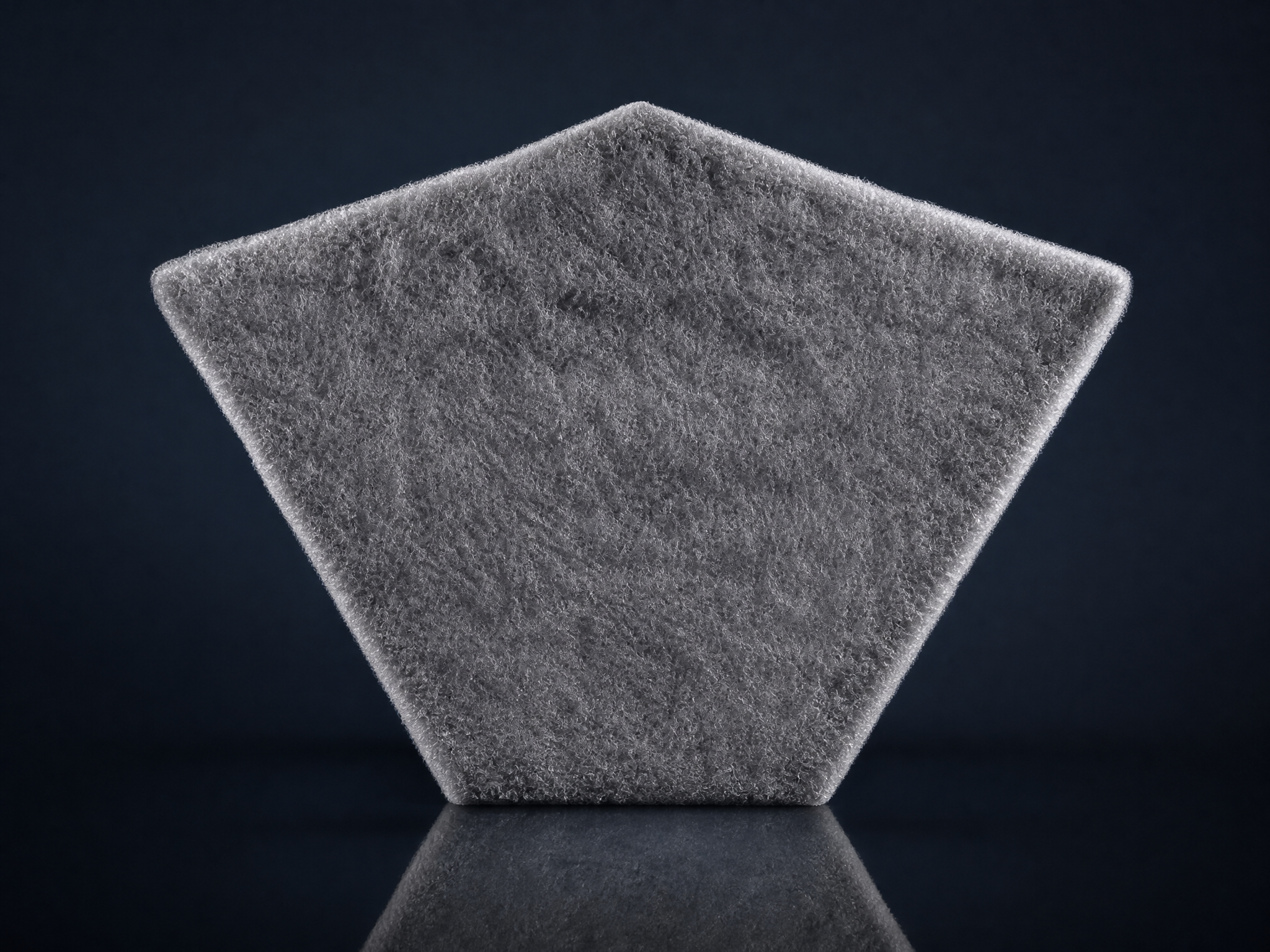
The Role of 3D Pile Structure in Filter Media Performance
When engineers and operators evaluate pile cloth filtration systems, one of the most critical — yet often underappreciated — factors is the physical architecture of the filter media itself. The 3D pile structure is not simply a surface coating or a manufacturing detail. It is the fundamental mechanism that defines how a pile cloth filter performs across a wide range of wastewater and water treatment applications.
Understanding the geometry, fiber behavior, and hydraulic properties of pile filter media helps operators make better decisions — from initial system selection to long-term maintenance planning.
What Makes a 3D Pile Structure Different?
Unlike flat woven or membrane filter media, 3D pile filter media consists of upright fiber loops or tufts anchored to a woven backing fabric. This creates a three-dimensional filtration zone — a depth that flat media simply cannot replicate.
The key structural elements include:
- Pile height: The length of fibers extending from the backing, typically ranging from a few millimeters to over a centimeter depending on the application
- Fiber density: The number of fiber loops per unit area, which directly influences pore size distribution and solids capture
- Fiber material: Typically synthetic polymers engineered for durability, chemical resistance, and consistent performance across varying pH and temperature conditions
- Backing weave: The structural foundation that maintains pile integrity under hydraulic loading and repeated backwash cycles
The combination of these elements creates a tortuous flow path through the filter media. Suspended solids are captured not just on the surface but throughout the depth of the pile layer — a principle known as depth filtration.
How the 3D Pile Structure Influences Filtration Performance
Solids Capture and Depth Filtration
Because particles must navigate through a three-dimensional fiber matrix, the 3D pile structure achieves high removal efficiency for a broad range of particle sizes. Fine suspended solids, biological floc, and even some colloidal material are intercepted within the pile depth rather than simply blocked at a flat surface.
This depth filtration mechanism offers several practical advantages:
- Higher solids holding capacity before head loss increases significantly
- More gradual pressure differential buildup, allowing longer filter runs
- Reduced risk of surface blinding, which is a common failure mode in flat media systems
Hydraulic Behavior and Flow Distribution
The open, three-dimensional nature of pile fiber media promotes uniform flow distribution across the filter panel or disc surface. This prevents channeling — a condition where flow concentrates in localized areas, bypassing significant portions of the filter media and reducing overall efficiency.
Key insight for operators: Non-uniform flow distribution is one of the leading causes of premature filter media wear and inconsistent effluent quality. The 3D pile structure naturally mitigates this risk through its fiber architecture.
Backwash Effectiveness
One of the most operationally significant advantages of 3D pile filter media is its response to backwash cleaning. During a backwash cycle, the pile fibers flex and agitate, releasing captured solids back into the reject stream.
This fiber flexibility means:
- Solids are released efficiently without requiring aggressive backwash pressures
- The pile structure recovers its original geometry after each backwash cycle
- Media longevity is extended because cleaning is gentle relative to the solids removal achieved
Poorly designed pile media — with incorrect fiber density or pile height for the application — can experience fiber matting during backwash, where fibers clump together and fail to re-open fully. This progressively reduces filtration area and increases backwash frequency. Selecting media matched to the specific solids loading and particle characteristics of the application is therefore essential.
Application Considerations for Engineers
Not all 3D pile filter media performs identically. Engineers specifying pile cloth filtration systems should evaluate:
- Influent TSS concentration and particle size distribution — heavier solids loading may require deeper pile or higher fiber density
- Backwash frequency targets — applications with variable influent quality benefit from media with higher solids holding capacity
- Chemical environment — fiber material selection must account for any oxidants, acids, or elevated temperatures present in the process stream
- Regulatory effluent limits — tighter TSS or turbidity requirements may call for finer pile geometry
Explore our filter media and system options to find configurations suited to specific treatment challenges.
Summary and Key Takeaways
The 3D pile structure is the defining performance characteristic of pile cloth filter media. Its depth filtration mechanism, high solids holding capacity, and backwash-responsive fiber behavior make it fundamentally superior to flat filter alternatives for many municipal and industrial applications.
Bottom line: Operators who understand how pile geometry affects filtration and backwash performance are better positioned to optimize run times, reduce maintenance interventions, and consistently meet effluent quality targets.
Selecting the right pile filter media — matched to influent characteristics and operational goals — is not a secondary consideration. It is the foundation of a high-performing pile cloth filtration system.
Related: Learn more
Read More Articles
Discover more insights on pile cloth filtration and water treatment.