
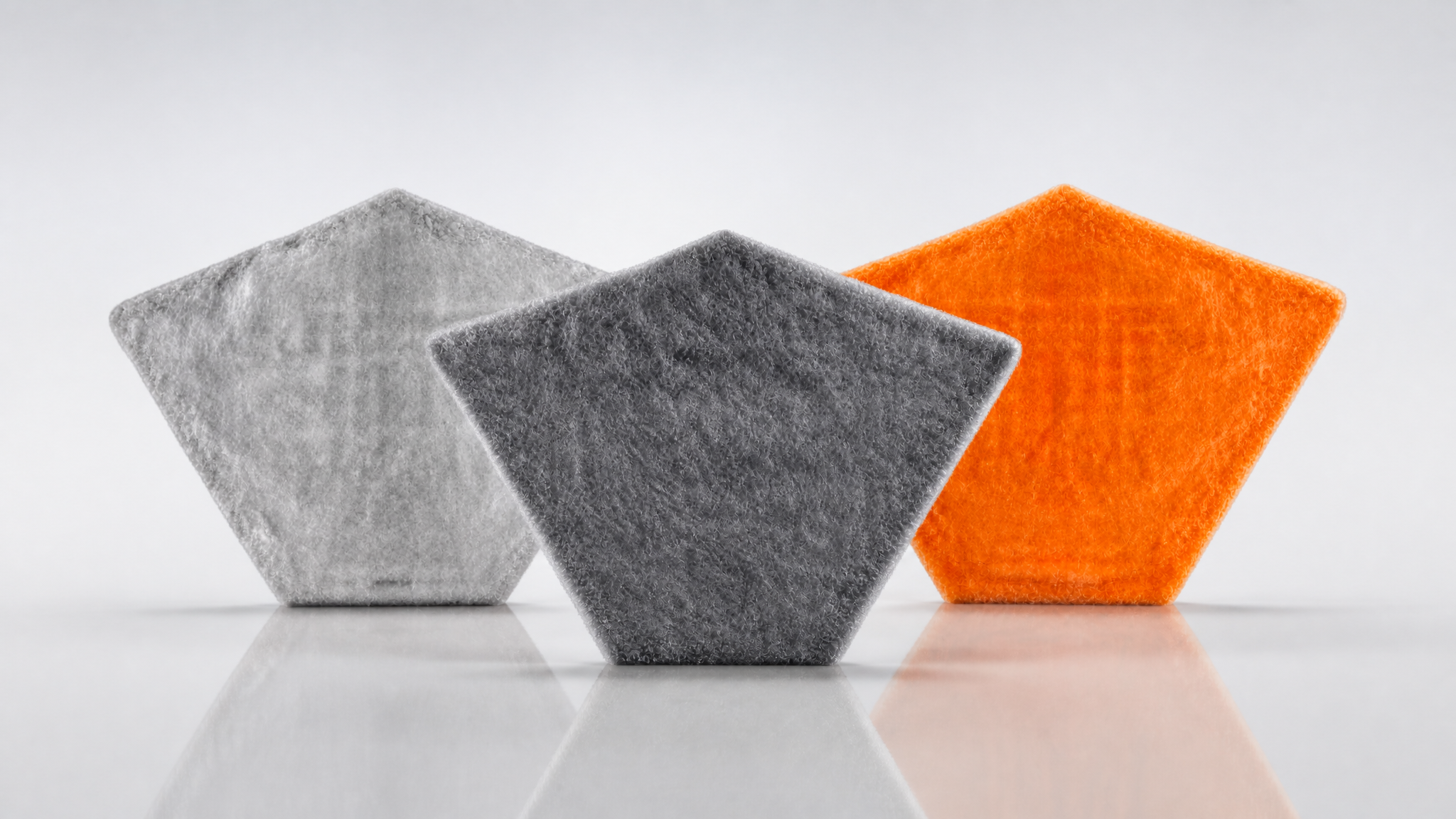
Understanding Filtration Grades: From 10µm to 2.5µm
When it comes to tertiary wastewater treatment and industrial liquid filtration, selecting the right filtration grade is one of the most consequential decisions an engineer or plant operator can make. The difference between a 10 micron and a 2.5 micron filter cloth may seem small on paper, but in practice it defines what contaminants are captured, what effluent quality is achieved, and how the entire filtration system performs over time.
This article breaks down what filtration grades mean in the context of pile cloth media, how particle size targets drive cloth selection, and what operators should consider when specifying their systems.
What Is a Filtration Grade?
A filtration grade refers to the nominal or absolute particle size threshold at which a filter medium reliably captures suspended particles. In pile cloth filtration, this is determined primarily by:
- The density and depth of the pile fiber structure
- The fiber diameter of the pile material
- The weave pattern of the base cloth supporting the pile
Unlike membrane or screen filtration, pile cloth media captures particles through a combination of mechanical straining, depth filtration, and interception. This means particles smaller than the nominal pore size can also be retained — particularly as a filter cake builds up during operation.
Key insight: Pile cloth filtration does not rely on a single fixed pore opening. It is a dynamic filtration mechanism, meaning the effective filtration grade improves as solids accumulate on the cloth surface during a filtration cycle.
The 10 Micron Grade: Robust Performance for Standard Applications
The 10 micron filtration grade is the workhorse of pile cloth filtration systems worldwide. It is well-suited for:
- Municipal wastewater tertiary treatment where effluent polishing after secondary clarification is required
- Stormwater and combined sewer overflow (CSO) treatment where high flow rates and variable solids loading are common
- Industrial process water with moderate suspended solids concentrations
At this grade, the pile cloth structure is engineered to balance high hydraulic throughput with reliable solids capture. The relatively open pile allows for longer filter runs between backwash cycles, reducing energy consumption and mechanical wear on cleaning systems.
Operators working with standard 10 micron pile cloth media will find this grade particularly forgiving during peak flow events, where sudden increases in solids loading could otherwise blind a finer medium prematurely.
Practical consideration: For applications targeting total suspended solids (TSS) removal to meet typical discharge permits in the range of 10–20 mg/L, the 10 micron grade frequently delivers compliant results with a well-operated system.The 2.5 Micron Grade: Precision Filtration for Demanding Effluent Standards
When effluent quality requirements become more stringent — particularly for phosphorus removal, microplastic capture, or reuse-quality water — the 2.5 micron filtration grade becomes essential.
This ultra-fine pile cloth grade is designed to capture:
- Fine colloidal particles that pass through coarser media
- Microplastics in the size range relevant to regulatory scrutiny
- Fine particulate phosphorus bound to small suspended solids
- Residual biological floc from activated sludge processes
The pile fiber structure at this grade is significantly denser and finer than standard media. This creates a more tortuous flow path through the cloth, increasing contact time between the liquid and the filtration surface.
Key takeaway: The 2.5 micron grade achieves its performance not just through smaller fiber spacing, but through the depth filtration principle — particles are captured throughout the pile depth, not just at the surface.
Facilities targeting effluent TSS below 5 mg/L, or those implementing water reuse schemes, should evaluate supermicrofiber 2.5 micron pile cloth as a primary or polishing filtration stage.
Practical consideration: Finer filtration grades require more frequent backwash cycles. System design should account for backwash water volume and frequency to ensure net water production targets are met.Choosing Between Grades: Key Decision Factors
Effluent Quality Targets
Define the required outlet particle size and TSS concentration first. Regulatory permits, reuse standards, or downstream process requirements will narrow your grade selection quickly.
Influent Characteristics
- High and variable TSS loading favors the 10 micron grade for operational stability
- Low, consistent TSS with fine particle fractions favors the 2.5 micron grade
Hydraulic Loading Rates
Finer pile cloth grades operate effectively at lower surface loading rates. Verify that available filter area is sufficient before specifying ultra-fine media.
Backwash System Compatibility
Ensure the backwash mechanism — whether suction, pressure, or rotating brush — is calibrated for the specific pile cloth grade in use.
Summary and Key Takeaways
Selecting the correct filtration grade in pile cloth systems is a technical decision with direct operational and regulatory consequences. The journey from 10 micron to 2.5 micron represents a significant leap in filtration precision, matched by corresponding adjustments in system design and operational management.
- 10 micron pile cloth delivers reliable, high-flow performance for standard municipal and industrial applications
- 2.5 micron supermicrofiber cloth unlocks fine particle and microplastic capture for advanced effluent quality requirements
- Both grades leverage the depth filtration principle inherent to pile cloth technology
- Matching the particle size target to the correct grade — and designing the system accordingly — is the foundation of successful pile cloth filtration
Understanding these grades empowers engineers and operators to specify with confidence and optimize performance across the full lifecycle of their filtration systems.
Related: Learn more | Learn more
Read More Articles
Discover more insights on pile cloth filtration and water treatment.