
What Is Biofouling and How Can It Be Prevented in Filtration?
Filtration efficiency loss due to biofouling: Up to 40% reduction in flow capacity within weeks of microbial colonization Biofilm formation onset: Microbial attachment can begin within 24–48 hours of filter media exposure to contaminated water Silver ion antimicrobial effectiveness: Effective against a broad spectrum of bacteria at concentrations as low as 0.1 ppmBiofouling is one of the most persistent and costly challenges facing operators in water and wastewater filtration. Whether you are managing a municipal tertiary treatment facility or an industrial process water system, understanding what biofouling is — and how to prevent it — is essential for maintaining consistent filtration performance and protecting downstream processes.
What Is Biofouling?
Biofouling refers to the undesirable accumulation of microorganisms, biofilms, algae, and other biological matter on filter surfaces and media. In filtration systems, this typically begins with the attachment of free-floating bacteria to the surface of the filter cloth. Once attached, these microorganisms secrete extracellular polymeric substances (EPS), forming a sticky matrix known as a biofilm.
Over time, this biofilm:
- Clogs filter pores, increasing differential pressure and reducing flow rates
- Harbors pathogens that can compromise effluent quality
- Accelerates media degradation, shortening the operational lifespan of filter cloth
- Increases cleaning frequency and chemical consumption, raising operational costs
In pile cloth filtration systems — where fabric media is used to capture suspended solids from water — the dense, fibrous structure of the pile provides an ideal surface for microbial colonization if left unprotected. This makes biofouling prevention a particularly important design and material consideration.
How Does Biofouling Develop?
The development of biofouling follows a well-understood progression:
Stage 1: Initial Attachment
Within hours of exposure to water containing organic matter and microorganisms, bacteria begin adhering to filter surfaces. This initial layer is often reversible and can be disrupted with standard backwashing.
Stage 2: Biofilm Formation
As bacteria multiply and produce EPS, a structured biofilm develops. At this stage, the colony becomes significantly more resistant to mechanical cleaning and chemical disinfection.
Stage 3: Mature Biofilm and Dispersal
A mature biofilm releases planktonic cells into the filtrate, potentially reseeding other parts of the system and creating secondary fouling problems downstream.
Key insight: Standard backwashing cycles can remove loose debris and early-stage biological deposits, but they are rarely sufficient to eliminate established biofilms from pile cloth media without antimicrobial protection built into the fabric itself.
Prevention Strategies in Pile Cloth Filtration
Preventing biofouling requires a multi-layered approach combining operational best practices with advanced material design.
1. Antimicrobial Filter Media
The most effective long-term solution is to use filter cloth that incorporates antimicrobial agents directly into the fiber structure. One of the most proven approaches involves the integration of silver particles into the pile fiber during manufacturing.
Silver has well-documented antimicrobial properties. When embedded within the pile fiber, silver particles continuously release silver ions into the boundary layer at the cloth surface. These ions disrupt bacterial cell membranes, inhibit enzyme activity, and prevent DNA replication — effectively suppressing microbial colonization before a biofilm can establish itself.
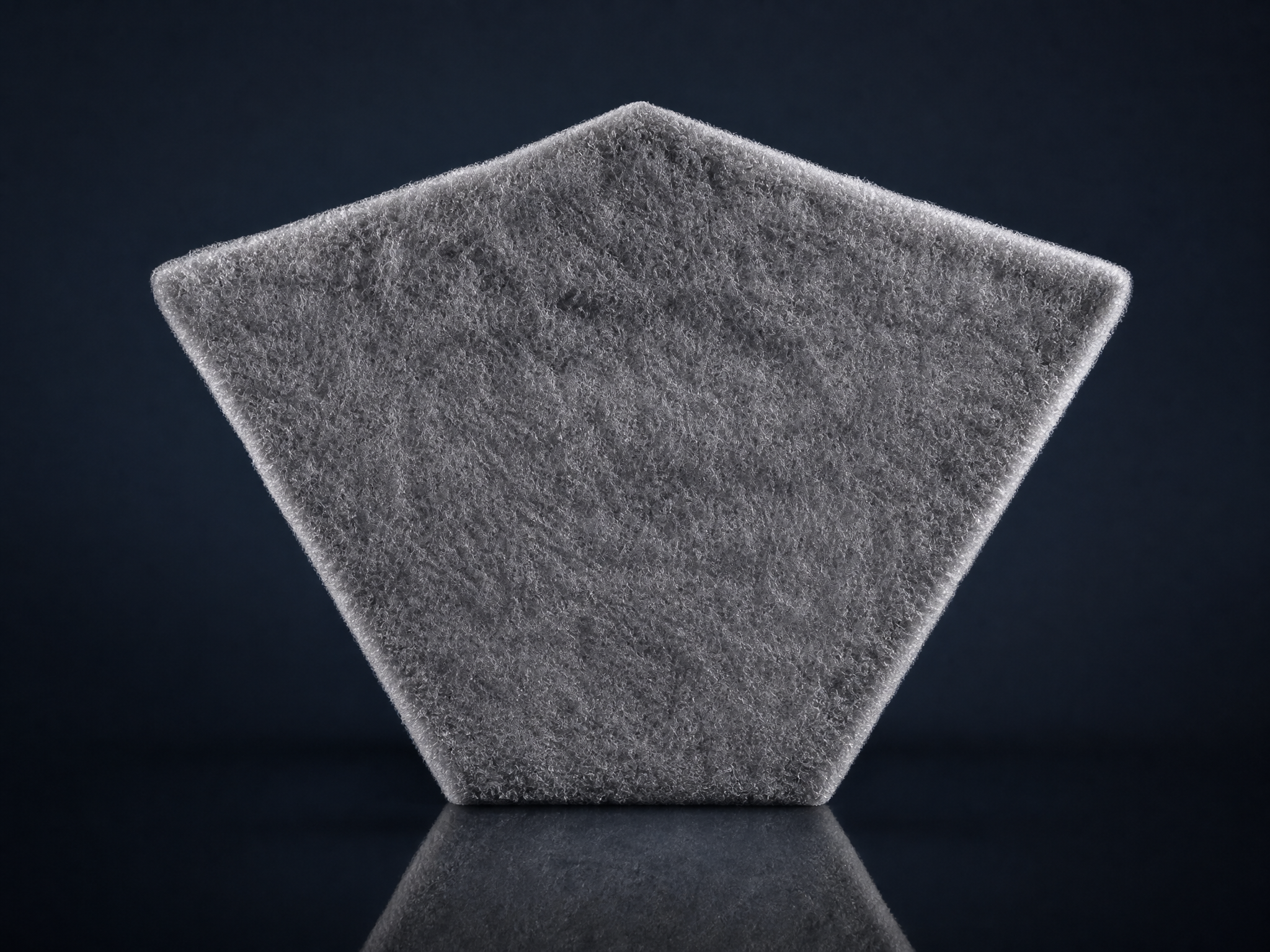
The Bioactive 5µm Microfiber pile cloth incorporates this silver-based antimicrobial technology, offering filtration down to 5 microns while actively resisting biofouling. This makes it particularly well-suited for wastewater treatment applications where biological loading is high and consistent effluent quality is critical.
2. Optimized Backwash Regimes
Even with antimicrobial media, a well-calibrated backwash cycle is essential. Operators should:
- Monitor differential pressure as a primary indicator of fouling onset
- Adjust backwash frequency seasonally, as warmer water temperatures accelerate microbial growth
- Avoid excessively long intervals between cleaning cycles, which allow biofilms to mature and harden
3. Pre-Treatment and Chemical Dosing
Where biofouling risk is particularly high — such as in systems treating warm, nutrient-rich influent — supplementary pre-treatment can reduce the biological load reaching the filter cloth:
- UV disinfection upstream of the filter reduces free-floating microbial populations
- Controlled chlorination can be used intermittently, though operators must balance efficacy against potential impacts on filter media longevity
- Coagulation and flocculation upstream help aggregate biological particles for removal before they reach the pile cloth surface
4. Media Selection and Filtration Grade
Choosing the correct filtration grade for your application is also a biofouling mitigation strategy. Finer media grades capture more biological particles in a single pass but may require more frequent cleaning. Coarser grades may allow more biological material to pass through. Using the Product Advisor can help identify the right balance of filtration efficiency and fouling resistance for your specific operating conditions.
Summary and Key Takeaways
Biofouling is a natural and inevitable challenge in any filtration system handling biological water streams, but it is not unmanageable. The most effective prevention combines:
- Antimicrobial pile cloth media incorporating silver particles for continuous surface protection
- Proactive backwash management calibrated to seasonal and load variations
- Upstream pre-treatment to reduce incoming biological burden
For operators in municipal or industrial wastewater treatment, investing in bioactive filter media — such as the Bioactive 5µm Microfiber — represents a practical and cost-effective strategy to extend media life, protect effluent quality, and reduce the total cost of filtration system ownership. Understanding biofouling is the first step; designing against it is what separates reliable, long-term filtration performance from constant reactive maintenance.
Related: Learn more
Read More Articles
Discover more insights on pile cloth filtration and water treatment.