
R+F · Process knowledge
RBC and cloth filtration: biological treatment followed by solids separation
A rotating biological contactor treats biodegradable organic pollution with an attached biofilm. A subsequent cloth filter separates detached biomass and other suspended particles. Combining them requires a design for both biological loading and solids loading — not just a hydraulic flow figure.
Find and request a solution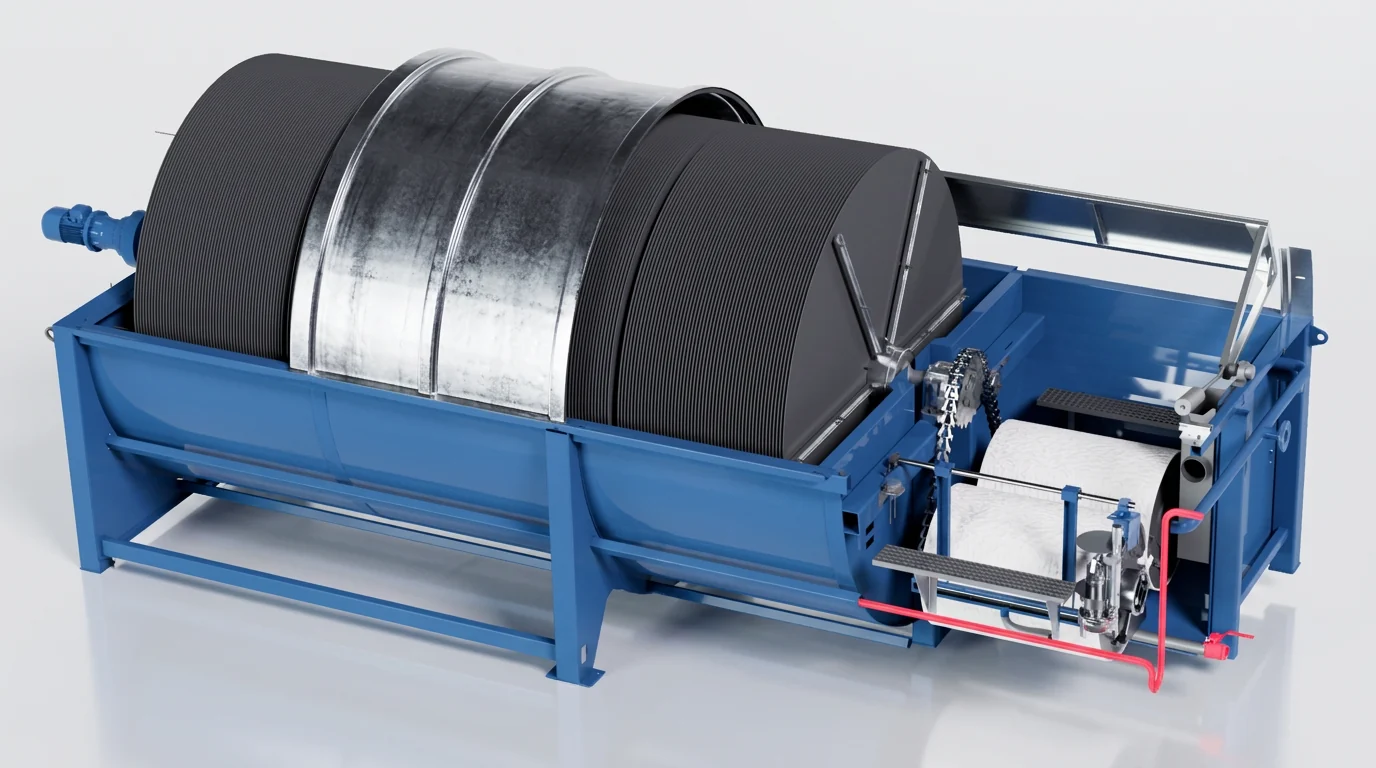
1. Pretreat the incoming wastewater
Consider screening and suitable primary treatment to manage coarse material and solids that would burden the biological stage. The required upstream arrangement depends on wastewater characteristics and the overall treatment concept.
2. Support the biological process
Partially submerged rotating media carry a biofilm that alternately contacts wastewater and air. Biodegradable organic matter is used by the microbial community. Available surface, loading, staging and temperature influence performance. Nitrification must be explicitly included in the biological design when required.
3. Capture the released biomass
Biofilm growth and detachment produce suspended solids. The downstream cloth filter must be designed for that actual duty. Hydraulic reference values for tertiary polishing cannot be transferred without checking the biomass load and cleaning requirements.
4. Manage residuals and discharge requirements
Separated sludge and cleaning water need an agreed destination. Additional phosphorus treatment, nitrogen treatment or disinfection may be required by the discharge or reuse target. RF-RBC is specified against those site requirements, not an assumed universal removal percentage.
Questions and answers
What does BOD₅ tell the designer?
BOD₅ is a measure of biodegradable organic pollution based on oxygen demand over five days. Together with wastewater flow it helps describe the organic loading the biological stage must handle.
Does nitrification remove total nitrogen?
Nitrification converts ammonium to nitrate. It is not, by itself, complete nitrogen removal. Additional process steps and suitable conditions are needed where a total nitrogen limit applies.
Why not publish a generic RF-RBC removal rate?
A technology-level removal rate depends on its source conditions and is not evidence for a particular RF-RBC installation. A project specification must define the influent, configuration, operation and required effluent quality.
Continue your planning
Find and request a solution
R+F is your first point of contact for media selection and complete-system inquiries. Supply scope and project delivery are agreed individually.
Find and request a solution